
On This Day in Aviation History

2010-08-29

On This Day in Aviation History: August 29th

1879, Nellie Thurston becomes the first Canadian woman to fly, sailing in a balloon over Ontario.

1909, Count von Zeppelin completes a 400-mile, two day flight from Lake Constance to Berlin aboard his LZ5 dirigible.

1911, Mrs. A. Hewlett becomes the first woman in Britain to obtain a pilot’s license.

1929, Graf Zeppelin sets down at Lakehurst, New Jersey to complete its circumnavigation of the globe.

1931, Graf Zeppelin completes the first flight between Germany and Brazil.

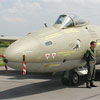
1955, W.F. Gibb pilots an English Electric Canberra B 2 to a world record altitude of 65,889 ft.

1958, the United States Air Force Academy opens in Colorado Springs, Colorado.

1996, Vnukovo Airlines Flight 2801, a Tupolev Tu-154M (reg RA-85621) operating a charter flight from Moscow to Svalbard, Norway, crashes into a mountain after the crew botches the approach to Svalbard, killing all 141 on board. It is the deadliest crash ever to occur in Norway.

2005, Louis Armstrong New Orleans International Airport (MSY) is impacted by Hurricane Katrina, but suffering no flooding. The airport would reopen to supply and rescue flights by the following day, with commercial cargo flights resuming September 10th and passenger flights restarting on September 13th.

2007, airmen at Minot Air Force Base in North Dakota load six nuclear-tipped AGM-129 ACM cruise missiles onto a B-52H bomber for transport to Barksdale Air Force Base in Louisiana without ensuring that the nuclear warheads had been replaced with training warheads. The nukes shoot the breeze without proper handling or security precautions in place for a full 36 hours before anyone notices. The Pentagon would classify it as a “Bent Spear” event, four USAF commanders would lose their jobs and many other airmen would be disciplined.


About the Author

admin


Today in Aviation History: January 6

Happy birthday to Lufthansa! United Grounds Ted, the US Marines take delivery of their first AV-8 Harrier and more...
by NYCAviation Staff


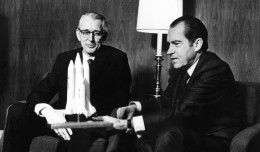
President Richard M. Nixon and Dr. James C. Fletcher, NASA Administrator, discuss the proposed Space Shuttle vehicle in San Clemente, California, on January 5, 1972. (Photo by NASA)

Today in Aviation History: January 5th

The Space Shuttle program is launched, Amelia Earhart is declared legally dead, Independence Air ceases operations, and more...
by NYCAviation Staff


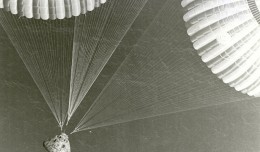
The Apollo 17 spacecraft, containing astronauts Eugene A. Cernan, Ronald E. Evans, and Harrison H. Schmitt, glided to a safe splashdown at 2:25 p.m. EST on Dec. 19, 1972, 648 kilometers (350 nautical miles) southeast of American Samoa. The astronauts were flown by recovery helicopter to the U.S.S. Ticonderoga slightly less than an hour after the completion of NASA's sixth and last manned lunar landing in the Apollo program. (Photo by NASA)

Today in Aviation History: December 19th

The world's first airport opens near Paris, the last moon mission returns to earth, a Chalk's Ocean Airways crash is captured on video, and more...
by NYCAviation Staff


Today in Aviation History: December 16th

The midair collision of a United DC-8 and TWA Constellation over New York City, Concorde makes the first sub-3-hour Atlantic crossing, an Air Canada CRJ crashes, and more...
by NYCAviation Staff
726


Today in Aviation History: December 15th

In a near disaster, KLM Flight 867 loses all engines temporarily after flying through a cloud of volcanic ash, McDonnell Douglas and Boeing merge, the Boeing 787 makes its first flight, and more..
by NYCAviation Staff