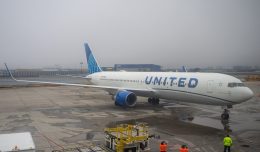
2006: Atlantic Airways Flight 670, a BAe 146, slides off the runway while landing at Stord, Norway, and bursts into flames, killing four of the 16 people on board. The failure of the spoilers combined with a wet runway are blamed for the accident.
1998: A Lignes Aériennes Congolaises Boeing 727 (registered 9Q-CSG) is struck by a shoulder-fired missile just after takeoff from Kindu, Democratic Republic of Congo. The crew attempts an emergency landing but fails, and all 41 on board perish. Local rebels claim responsibility for the attack.
1997: Austral Líneas Aéreas Flight 2553, a DC-9-32 (registred LV-WEG) crashes in Uruguay, killing all 69 passengers and five crew. The accident is blamed on a frozen pitot tube, which prevented the crew from receiving accurate speed measurements.
1976: First flight of the Embraer EMB 121 Xingu.
1962: A Royal Canadian Air Force CF-101 Voodoo (17452) is given takeoff clearance at RCAF Station Bagotville before a Trans Canada Airlines Vickers Viscount (CF-THA) clears the runway, killing a flight attendant and a passenger on the Viscount.
1958: A US Air Force Thunderbirds C-123B Provider support aircraft strikes a flock of birds and crashes near Payette, Idaho, killing all 19 people onboard.
1953: An RAF English Electric Canberra twin-engine jet wins the Christchurch Centenary Air Race, flying 11,792 miles (18,976 km) from England to New Zealand in 23 hours 50 minutes.
1950: First flight of the Boulton Paul P.111 single-engine jet.
1933: A United Airlines Boeing 247D crashes near Chesterton, Indiana while making a multi-stop transcontinental flight between Newark and Oakland, killing all four passengers and three crew on board. Investigators determine that a nitroglycerin bomb had exploded in the baggage compartment, marking history’s first air sabotage incident. No motive or suspects were ever named.
1923: The first US Navy rigid airship, USS Shenandoah (ZR-1) is christened.
1907: French aviation pioneer Robert Esnault-Pelterie flies his seven cylinder, 30 hp Pelterie I for the first time. It is the first flight ever controlled with a joystick, a feature that would become standard in most aircraft.