Last week was a particularly glorious week in the Pacific Northwest. Predictably, Saturday brings unusually heavy rain. (That is all you need to know if you wondered why/how Seattleites spend so much time indoors designing airplanes and software after three espressos.) Despite the unfortunate change in the weather, a number of us were tempted outside by our honored guests at the Museum of Flight’s Naval Aviation Appreciation Day. A crew representing Patrol Squadron ONE brought us a Lockheed P-3C Orion (161736) to tour and help celebrate 100 years of naval aviation.
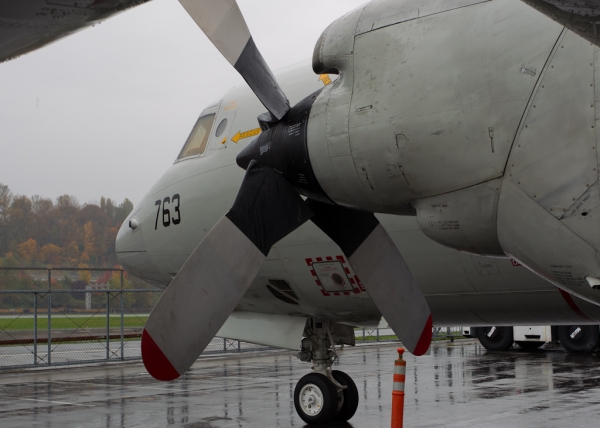
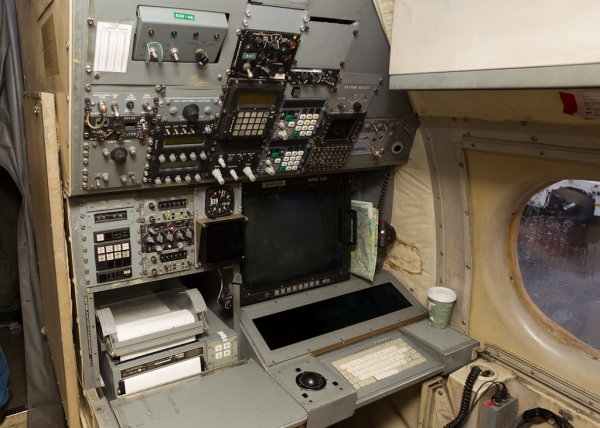
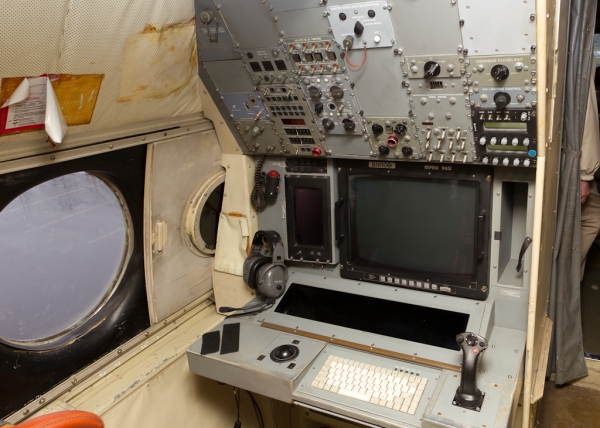
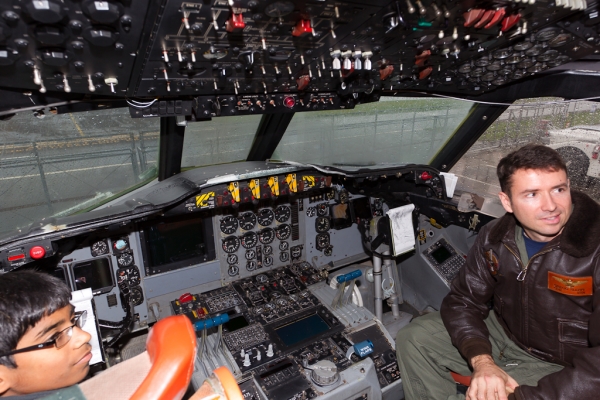


VP-1 is one of six P-3 squadrons assigned to Naval Air Station Whidbey Island in Washington (including the two EP-3E squadrons). The squadron was commissioned during WWII as a bombing squadron to support anti submarine operations in the North Atlantic. This was short lived as the convoy lanes were moved to the south, out of the range of the PV-1 Venturas they were flying at the time. They had a short deployment to Puerto Rico before being assigned to the Pacific Theater where they spent the remainder of the war. NAS Whidbey became their permanent home in 1948, although they have been assigned to Japan, Guam and Diego Garcia in support of over seas operations over those 60 years. A quick read of their website shows a crack squadron, winning dozens of awards over the years. Safety is clearly a high priority. Although this clock was reset a few years ago, their previous safety streak spanned 135,000 accident free flight hours over 27 years.
The story of their beloved P-3 begins over 50 years ago. In 1957, the US Navy was looking to replace the PV2 Neptune. (The only type flown by VP-1 other than the Orion and Ventura.) The Navy started talking with Lockheed very early in the L-188 Electra program. Although there are significant structural differences, the first P-3 was created by modifying the third frame off the Electra line. Changes are primarily related to structural upgrades for hard points and the bomb bay, and removing 23 feet from the forward fuselage. A production run of 757 frames started in 1962, with a little over 100 built under license by Kawasaki. The P-3 still serves 18 countries across the globe, including roughly 130 in the US Navy’s inventory. The copy on display this particular day was built in 1984, about 25 years ago. It’s fitting that NAS Whidbey hosts such a large portion of the P-3 fleet as their work mirrors that of many of Seattle’s iconic employers – it’s long, sometimes tedious work that requires synergy between each member of the team.
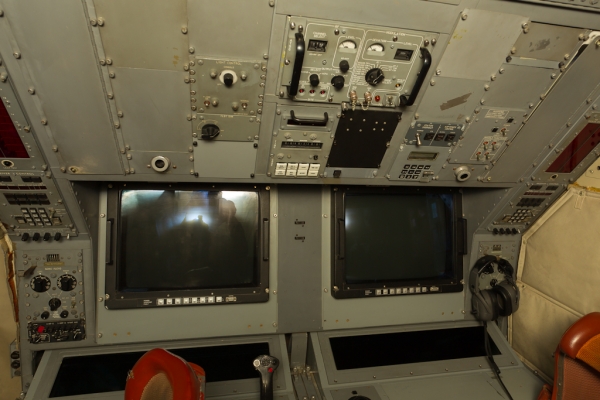
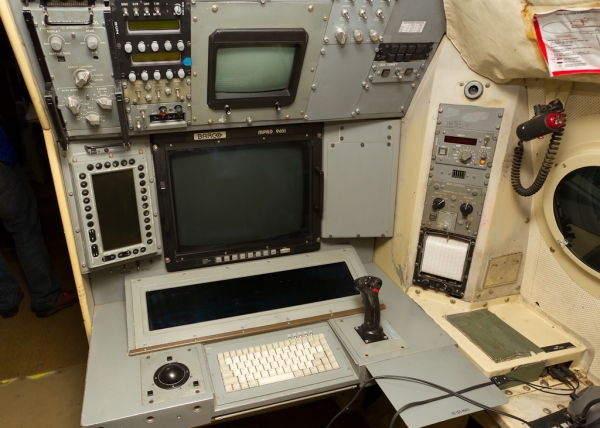
It was the teamwork that attracted Commander Gregg Sleppy to this assignment and finds him in his third tour with VP-1. Gregg knew immediately the P-3 was where he wanted to serve. Not even the Navy’s three mandatory (Yes ladies and gentlemen, mandatory) F-18 flights made him question his decision, and he’s been serving on them ever since. There is something about the challenge of searching for an invisible target in a near endless ocean that requires a certain personality, a lot of talent, and hard core determination. The successful interaction between the acoustic and radar stations, the navigation/communication and tactical operations stations, and the challenge of keeping everyone in their seats while flying at 200 feet over the water is part of what drew the commander to stay with the P-3 for over 16 years.
These 16 years have been a time of transition for Orion crews. While the P-3 remains the primary Anti Submarine Warfare (ASW) platform, their mission has evolved to meet new threats and they now fly roughly an equal number of Intelligence, Surveillance and Reconnaissance (ISR) missions. This role has understandably made them an integral part of the wars in Iraq and Afghanistan over the past decade.
A third role fulfilled by the P-3 is Search and Rescue. The crew tells the story of their part in the search for Lt. Miroslav “Steven” Zilberman earlier this year. Steven was flying an E-2C over the Arabian Sea when the starboard engine shut down. He was able to maintain control long enough to allow his three crew mates to bail out. AW01 Ryan Shephard explains that when you have the chance to save a life, you can maintain intense focus for a very long time without fatigue. He was at the radar scope continuously for over 14 hours. Unfortunately, Steven was not found alive, and he was posthumously awarded the Distinguished Flying Cross for saving the lives of his crew.
Over the course of the afternoon, between the panel discussion and listening to the crew conversing with other museum guests, I got a great sense of the heart of these men and women. This ranged from the dedication of each for their individual assignments to the understanding that the P-3 community has an abundance of Maine lobster anecdotes: a six man crew stuck with 300 fresh lobster on board due to mechanical difficulties, for example. Each member of the crew was extremely gracious, continuing to shake hands and engage young future pilots over the fence even as the Orion was being prepped for departure in the pouring rain.
Finally, and most of all, I want to thank VP-1 and their families for their service and sacrifices, and welcome them back from their recent deployment in Qatar.
NYCAviation would like to thank the Museum of Flight, CDR Sleppy , and the crew of the Orion for their contributions to this article.
Also, congratulations to VP-1 member AW01 Ryan Shephard for making CPRW-10 Navy League Sailor of the Year.